Green Belts 2.0
Intro
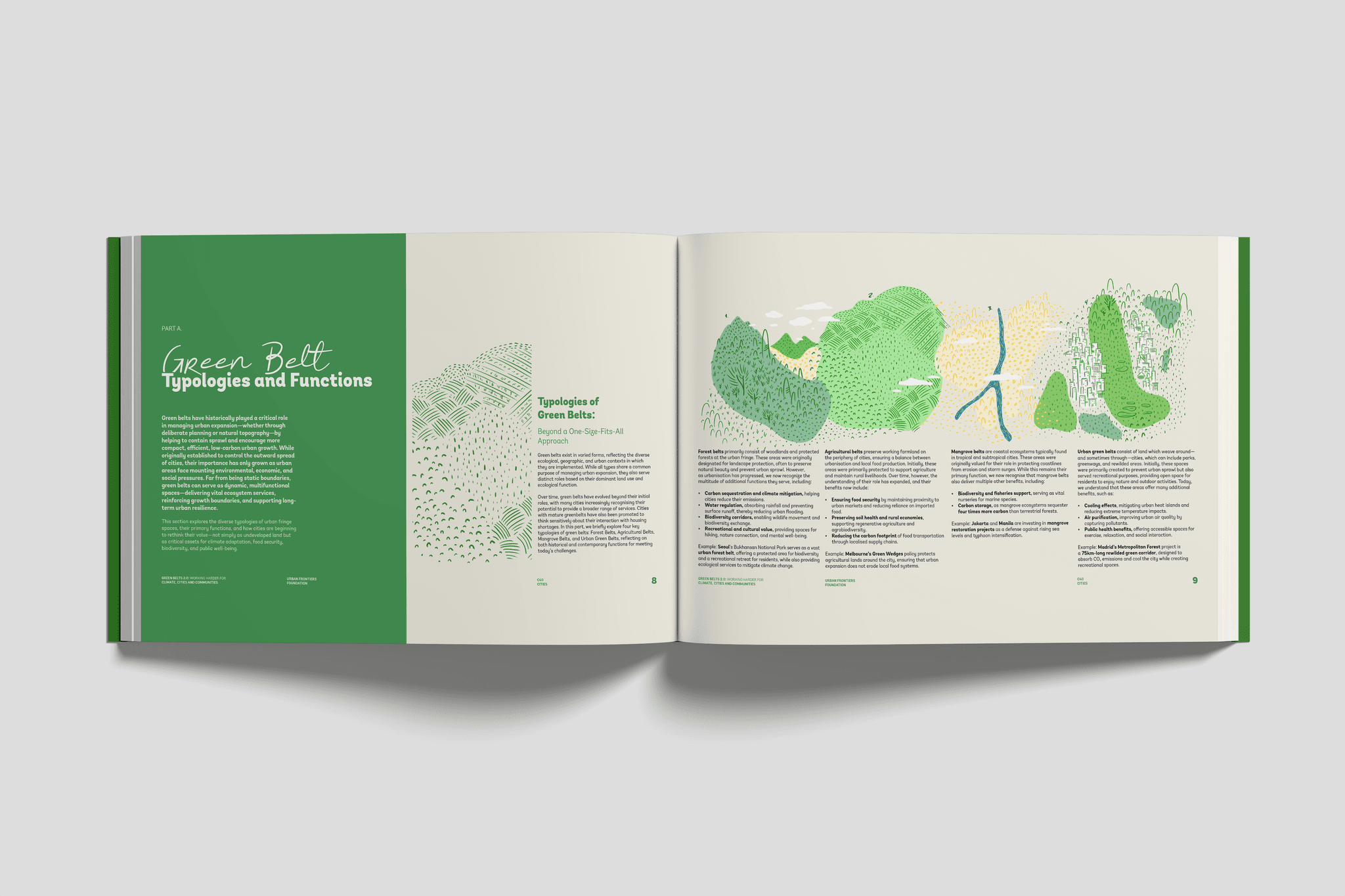
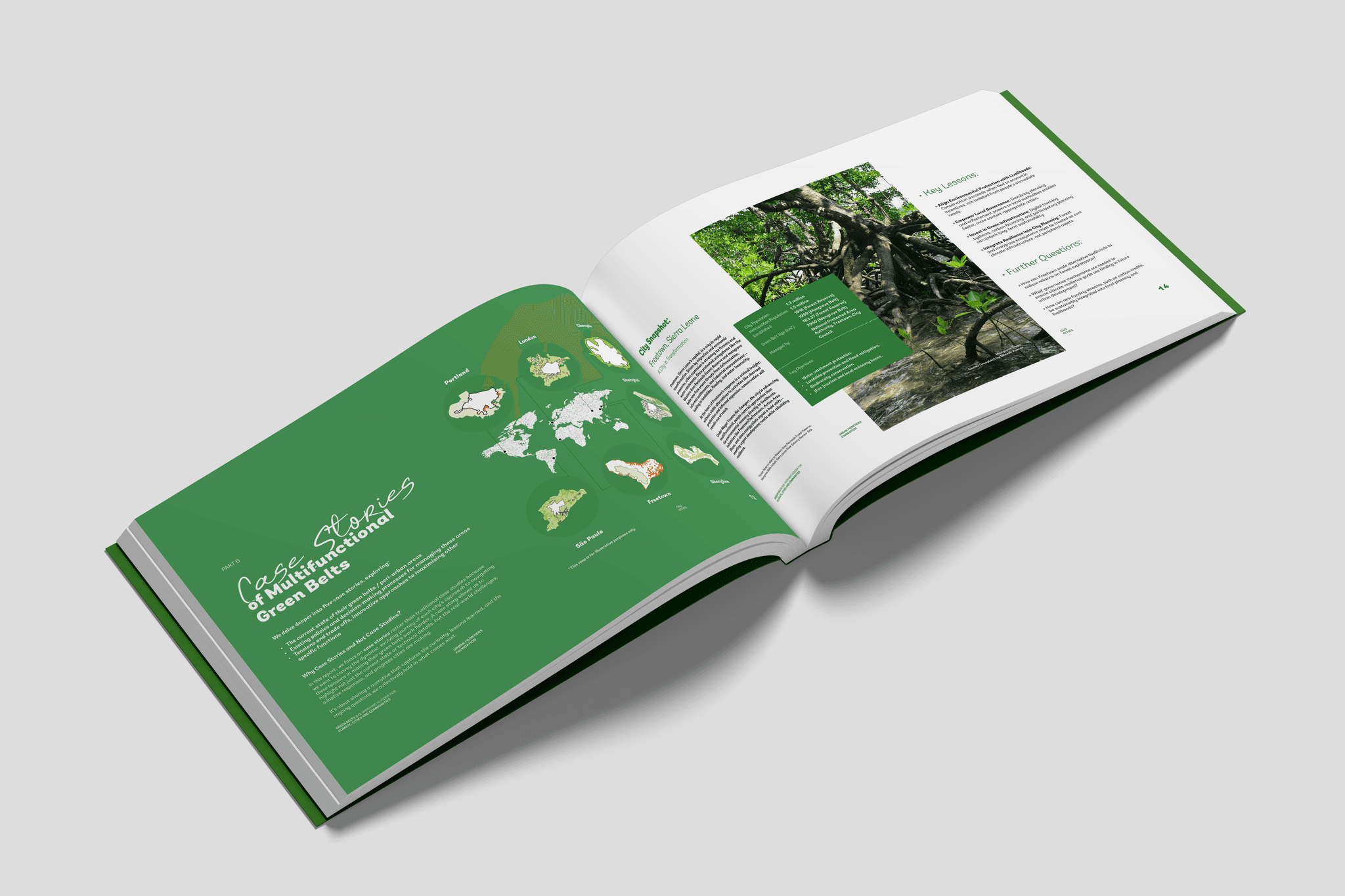
As urban populations grow and competition for land intensifies, cities face increasingly complex decisions about how land should be used, protected, and managed. This report examines the evolving role of green belts—strategically planned open spaces on the urban fringe—as critical infrastructure for addressing urban challenges. Originally pioneered in London through the work of Nicky Gavron, the report argues that green belts should move beyond the traditional debate of preservation versus development and instead be understood as multifunctional landscapes that support climate resilience, biodiversity, public well-being, and sustainable urban growth. Drawing on examples from cities across different continents, the report highlights how green belts can deliver multiple environmental and social benefits when supported by effective planning, governance, and financing strategies. It ultimately calls for city leaders and planners to rethink green belts not as passive protected spaces, but as dynamic assets that integrate ecosystem services—such as flood mitigation, urban cooling, biodiversity support, and local food production—into broader urban development and climate adaptation strategies.